Pest Control Service Long Beach delivers immediate tactical intervention to eliminate destructive insect and rodent populations across Los Angeles County residential properties and commercial facilities. When wood-destroying drywood termites penetrate structural framing or roof rats breach subfloor crawlspaces near coastal waterways, field specialists deploy precision extraction methods and durable physical barriers to secure living spaces.
No forms — call now for a fast, no-pressure quote.
📞 Call (562) 471-3713
A professional Pest Control Service company in Long Beach is a licensed structural pest management provider that deploys systematic chemical, mechanical, and thermal eradication protocols to eliminate active insect, wood-destroying organism, and rodent infestations from residential and commercial structures.
Every service reflects the same meticulous attention to detail — whether it's a single job or a larger pest control service project across Long Beach.
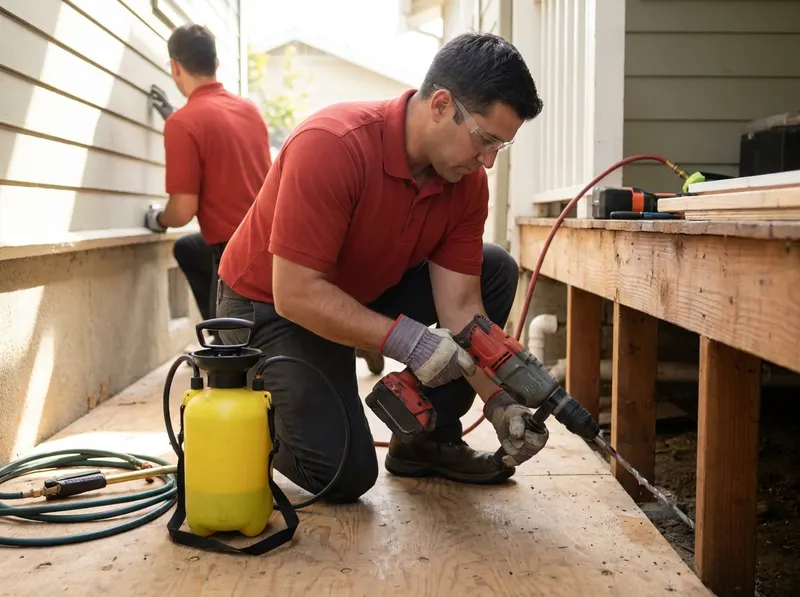
Specialized termite eradication protocols address both drywood termites (Incisitermes minor) and western subterranean termites (Reticulitermes hesperus) infesting residential wood framing. Technicians perform systematic acoustic sounding, fiber-optic wall void inspections, and thermal imaging across attics, subfloors, and exterior eaves to map active galleries. Field crews execute targeted precision foam and liquid termiticide injections directly into active wood tunnels using micro-drill ports, or coordinate whole-structure vinyl tent fumigation utilizing structural sulfuryl fluoride gas for widespread colony saturation. Following active eradication, specialists apply surface-penetrating disodium octaborate tetrahydrate (borate) salt solutions to bare structural lumber to establish a permanent repellent barrier against future wood-destroying insect colonization.
View details →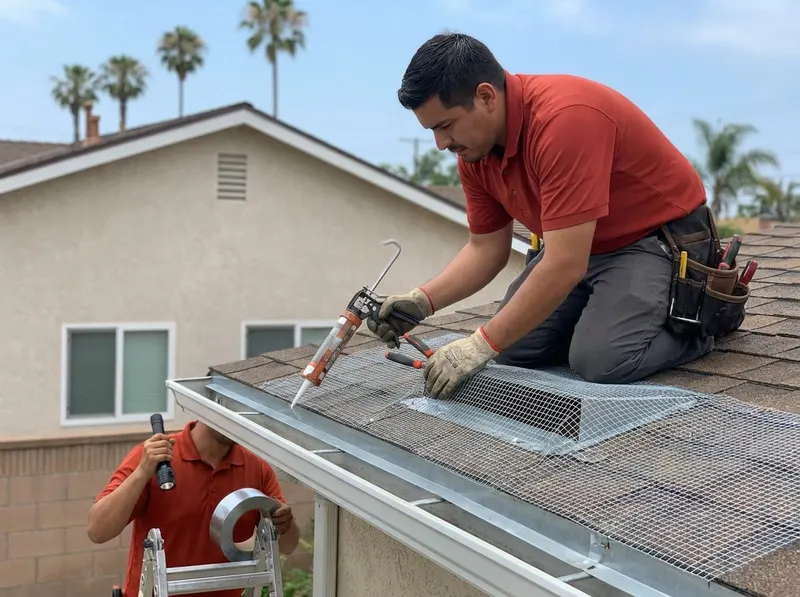
Comprehensive rodent management targets invasive roof rats (Rattus rattus), Norway rats (Rattus norvegicus), and house mice (Mus musculus) nesting inside ceiling cavities, crawlspaces, and exterior landscape foliage. Technicians inspect the entire exterior envelope to identify all active access points, chewing marks, rub marks, and droppings. Field teams install heavy-duty 19-gauge 1/4-inch galvanized hardware cloth, elastomeric sealants, and stainless steel mesh around foundation louver vents, roofline intersections, fascia transitions, and HVAC line penetrations. Inside the structure, crews deploy snap traps and multi-catch mechanical capture systems along established travel runways to rapidly remove trapped populations without using toxic rodenticides indoors, completing the service with high-efficiency particulate air (HEPA) vacuuming, antimicrobial sanitization, and soiled insulation extraction.
View details →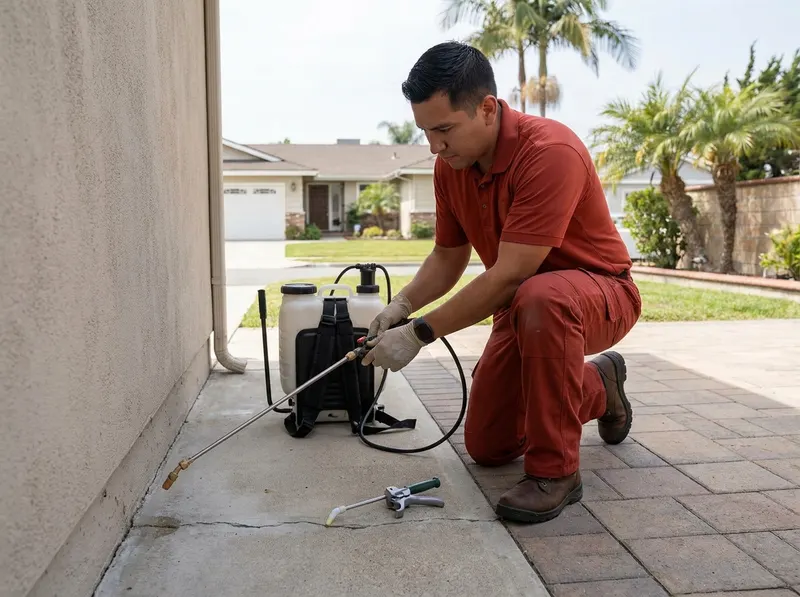
Targeted ant eradication programs neutralize complex super-colonies of Argentine ants (Linepithema humile), moisture-seeking odorous house ants (Tapinoma sessile), and wood-excavating carpenter ants (Camponotus spp.). Technicians trace foraging trails along foundation footings, concrete expansion joints, and landscape irrigation pathways to locate primary subterranean nests and secondary satellite colonies. Crews apply advanced non-repellent liquid transfer agents to exterior foundation stem walls and inject slow-acting carbohydrate and protein bait matrix gels into interior void spaces. Worker ants cross the treated perimeter without detection, transferring the active insect growth regulator horizontally throughout the broader colony via social grooming and trophallaxis, systematically neutralizing egg-laying queens within days.
View details →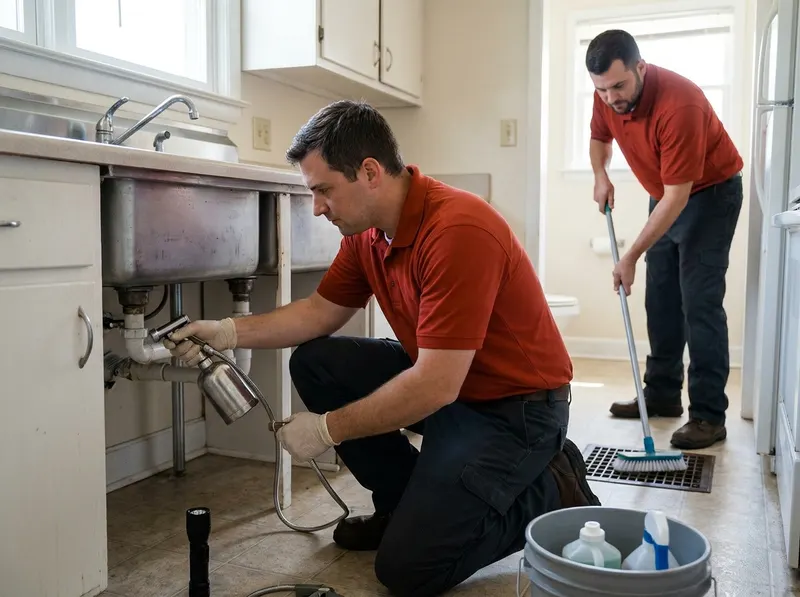
Intensive cockroach elimination protocols target resilient German cockroach (Blattella germanica) infestations in food preparation zones and large American (Periplaneta americana) or Oriental (Blatta orientalis) cockroaches emerging from municipal sewer lines and utility chases. Field technicians execute detailed crack-and-crevice treatments utilizing non-repellent active ingredients paired with juvenile hormone mimics that arrest the insect molting cycle. High-potency abamectin and hydramethylnon bait formulations are placed precisely behind kitchen appliances, under sink cabinet hinges, and adjacent to warm motor housings. Technicians also treat floor drains, grease interceptors, and perimeter plumbing chases with bio-enzymatic foam formulations that consume residual organic sludge layers where perimeter populations forage and reproduce.
View details →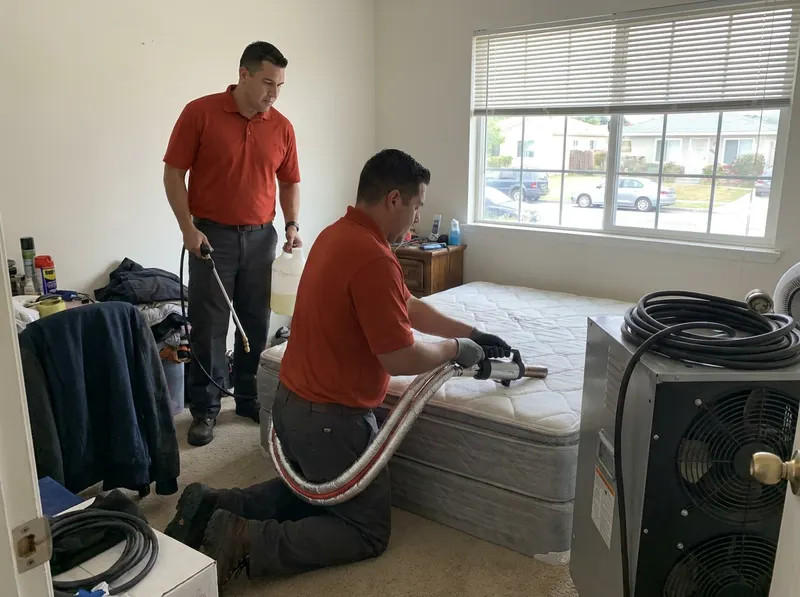
Rigorous bed bug (Cimex lectularius) management systems eradicate active blood-feeding insect populations across mattresses, upholstered furniture, box springs, and perimeter carpet tack strips. Specialists execute comprehensive physical inspections of mattress seams, headboards, electrical faceplates, and crown moldings using high-intensity tactical lighting. Treatment workflows combine high-temperature dry steam application, targeted residual microencapsulated chemical spraying, and precision desiccant dust applications inside wall voids and baseboard perimeters. For extensive multi-room or commercial lodging infestations, technicians deploy forced-air thermal convection systems to elevate ambient room temperatures above the 122-degree Fahrenheit lethal threshold, destroying all life stages including heat-resistant eggs in a single treatment cycle.
View details →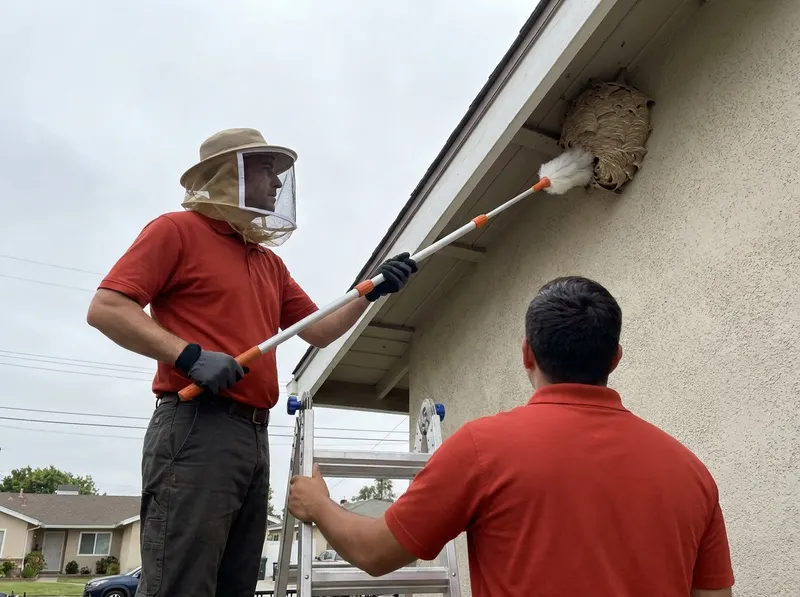
Emergency stinging insect removal procedures neutralize aggressive colonies of paper wasps (Polistes spp.), yellowjackets (Vespula spp.), and feral honeybees nesting in structural voids, attic vents, and exterior roof eaves. Technicians utilize protective tactical suits and telescoping application lances to deliver immediate knockdown pressurized freezing agents and residual insecticidal dusts directly into nest entry apertures. Once aerial or void activity is completely neutralized, technicians physically scrape, detach, and remove the outer paper comb structure, followed by applying enzymatic surface cleansers to eliminate residual pheromone markings that attract foreign queens attempting to establish replacement nesting territories on the same architectural junction.
View details →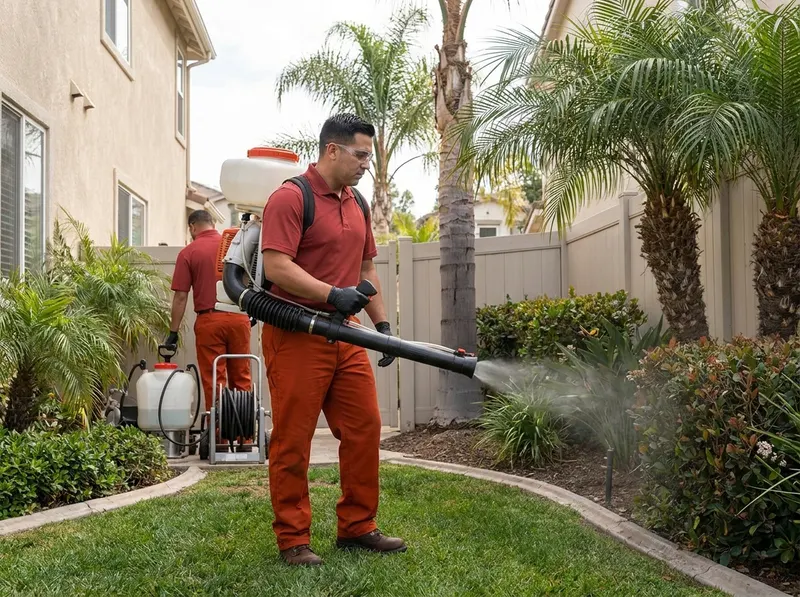
Comprehensive mosquito abatement protocols target invasive Asian tiger mosquitoes (Aedes albopictus) and common house mosquitoes (Culex pipiens) breeding across residential properties and landscape features. Specialists systematically inspect exterior grounds to locate artificial standing water reservoirs, clogged rain gutters, sub-surface yard drains, and low-lying planter basins. Field teams apply natural bacterial larvicides containing Bacillus thuringiensis israelensis (Bti) into standing drainage water to eradicate aquatic larvae before adult emergence occurs. Crews then treat the undersides of dense ornamental foliage, property boundary fences, and shaded patio zones using fine-droplet backpack misting blowers loaded with botanical adulticides to suppress active biting adults.
View details →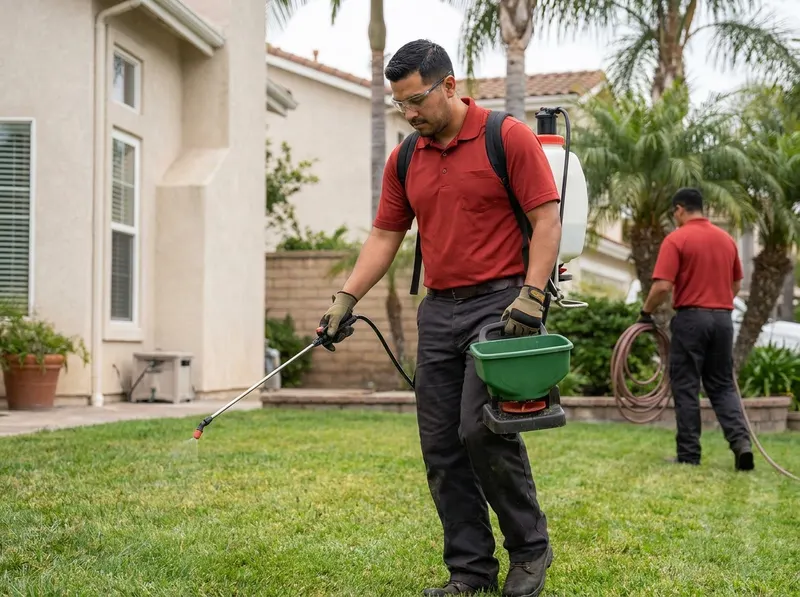
Intensive outdoor and indoor parasitic pest control protocols eliminate cat fleas (Ctenocephalides felis) and brown dog ticks (Rhipicephalus sanguineus) nesting in residential lawns, sand runs, and subfloor pet resting zones. Technicians apply specialized insect growth regulators combined with fast-acting adulticides across exterior turfgrass, shaded planter beds, deck perimeters, and crawlspace entries. Indoor treatments incorporate fine aerosol broadcast applications across carpeted rooms, baseboards, and furniture bases to halt egg development and prevent pupal emergence. This coordinated dual-zone application breaks the complete four-stage parasitic life cycle, establishing protective residual barriers that eliminate re-infestation risks for domestic companion animals.
View details →A professional Pest Control Service company in Long Beach is a licensed structural pest management provider that deploys systematic chemical, mechanical, and thermal eradication protocols to eliminate active insect, wood-destroying organism, and rodent infestations from residential and commercial structures.
You get a firm, itemized quote for your pest control service before any work begins — no surprises, no pressure.
Careful prep, tidy work, and a full cleanup when we are done. We treat your home and belongings like our own.
The same trusted, background-checked team from the first call to the final check.
Selecting the correct eradication strategy depends directly on the biological target, the structural architecture of the building, and the physical penetration depth of the pest population. If your structure exhibits localized subterranean termite mud tubes along an exterior slab or isolated drywood termite kickout holes in accessible window framing, choose targeted localized termiticide injection. If wood-boring insect activity extends into inaccessible attic rafters, concealed wall cavities, and multi-level floor joists, select whole-structure fumigation using sulfuryl fluoride gas under sealed vinyl containment tarps. The primary trade-off involves preparation labor and occupancy downtime versus long-term colony eradication; localized injection requires zero structural evacuation and lower immediate capital expenditure but cannot eliminate concealed colonies hidden behind drywall, whereas whole-structure fumigation guarantees complete atmospheric eradication across 100 percent of framing members but requires a 48 to 72 hour building evacuation. If roof rats or house mice have entered attic insulation or subfloor crawlspaces, choose comprehensive physical exclusion featuring galvanized 19-gauge wire mesh and multi-catch mechanical traps rather than broadcast rodenticide bait stations alone. Physical structural exclusion permanently seals utility conduit gaps, roof transitions, and foundation crawl vents to block re-entry, preventing indoor animal mortality and subsequent foul odor decomposition within wall voids; broadcast baiting offers a lower initial price point but relies on ongoing chemical replenishment cycles and carries the structural risk of unretrieved carcass decay beneath living spaces. For active kitchen infestations involving German cockroaches, choose systematic crack-and-crevice application of insect growth regulators combined with microencapsulated non-repellent baits over over-the-counter aerosol total release foggers. Aerosol foggers repel insect populations deeper into interior wall assemblies and electrical junction boxes, spreading the nesting footprint, whereas non-repellent transfer matrices allow worker insects to carry active ingredients directly back into interior colony aggregation harborages for total reproductive collapse. For bed bug activity confirmed across sleeping quarters, choose direct high-heat thermal remediation when single-visit turnaround is paramount, or select dual-stage residual chemical liquid applications when working within tight operational budgets; thermal remediation penetrates deep within upholstery foam and structural subfloors in a single day, while chemical protocols require two to three staged treatment cycles over a 30-day window to eliminate newly hatched instars.
Every project gets a firm, written price after a free on-site visit. Ranges below for orientation.
Tell us about your pest control service job and we'll send a clear, written quote — usually the same day. Or just call and talk to a real Long Beach pro.

Properties built across coastal and inland Long Beach face diverse structural pest threats dictated by the unique geography of Los Angeles County. Coastal neighborhoods surrounding the marine basins of Alamitos Beach, the marine canal networks of Naples, and waterfront residences near Belmont Shore experience exceptionally high ambient humidity, dense fog layers, and high water tables that accelerate fungal wood decay and create optimal nesting grounds for moisture-starved Argentine ant super-colonies. In historic inland districts such as Rose Park, California Heights, and Wrigley, architectural inventories feature early 20th-century Craftsman bungalows and Spanish Colonial Revival homes resting on raised post-and-pier foundations with low-clearance crawlspaces. These structural designs frequently develop open subfloor foundation vents, degraded mudsills, and weathered wooden eave overhangs that grant direct access to swarming drywood termites during late-summer Santa Ana wind events, while also providing entry points for foraging roof rats traveling along overhead electrical drops and mature Canary Island date palms. Further east in neighborhoods like El Dorado Park, Los Altos, and Park Estates, sprawling single-family residential properties located near extensive landscape reserves such as the El Dorado Nature Center face intense seasonal mosquito breeding cycles within sub-surface French drains and heavy rodent migration from contiguous greenbelts. Commercial and residential structures situated along major transport arteries like Pacific Coast Highway, Ocean Boulevard, and Interstate 405 face continuous pest pressures generated by high-density urban transit. Field technicians continuously navigate service routes across Lakewood Boulevard, 7th Street, and 4th Street to execute immediate, tactically precise pest interventions across all Long Beach sectors.
 Quick Response Pest Control